The festive table
The heart of Novruz — on a tray
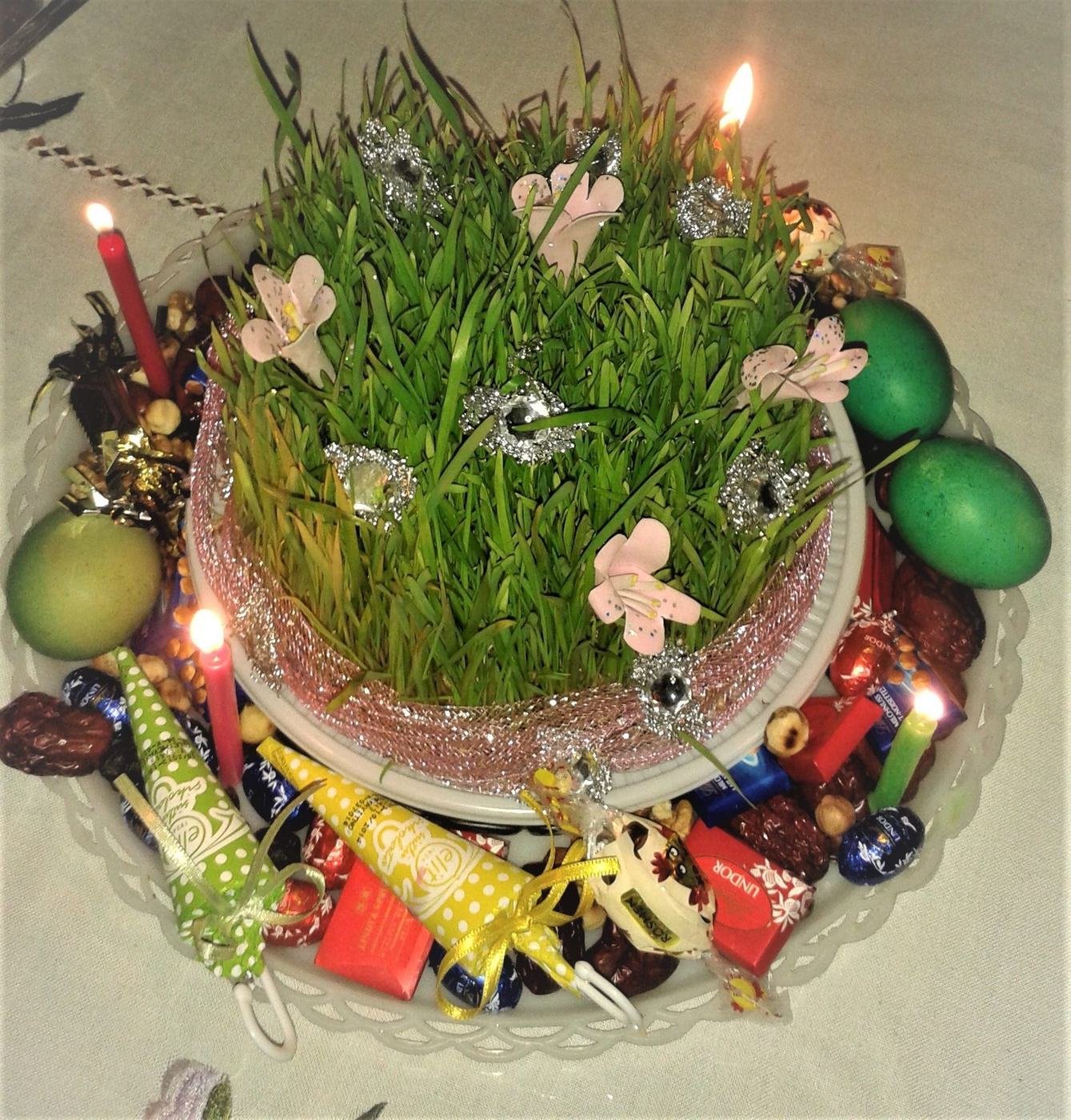
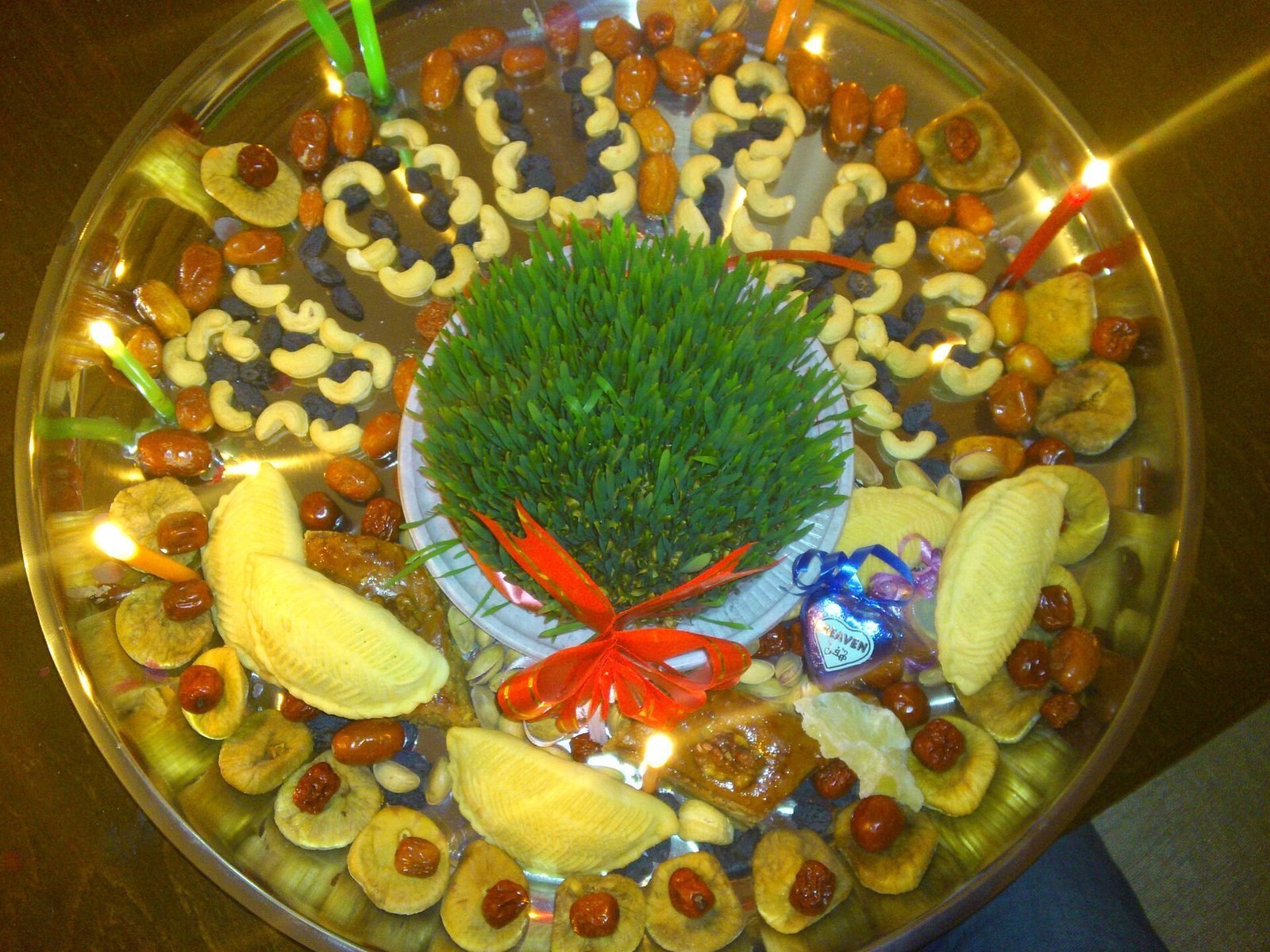
The main symbol of Novruz stands on the table — the khoncha, a large tray with sprouted səməni at its centre. Around it are arranged candles, dyed eggs, nuts, dried fruit and sweets.
Səməni — green wheat shoots — are grown in advance and stand for life, fertility and the coming of spring. There is even a song about them, “Səməni, saxla məni”.
Every object on the khoncha is full of meaning: the candle is light and warmth, the egg is birth, the mirror is clarity, and the sweets are a wish for a sweet year.
Səməni
The sprouted wheat at the centre of the table is the chief symbol of spring, life and fertility. It is grown with care for the festival.
Khoncha
The festive tray on which səməni, candles, eggs and sweets are gathered. The heart of the Novruz table.
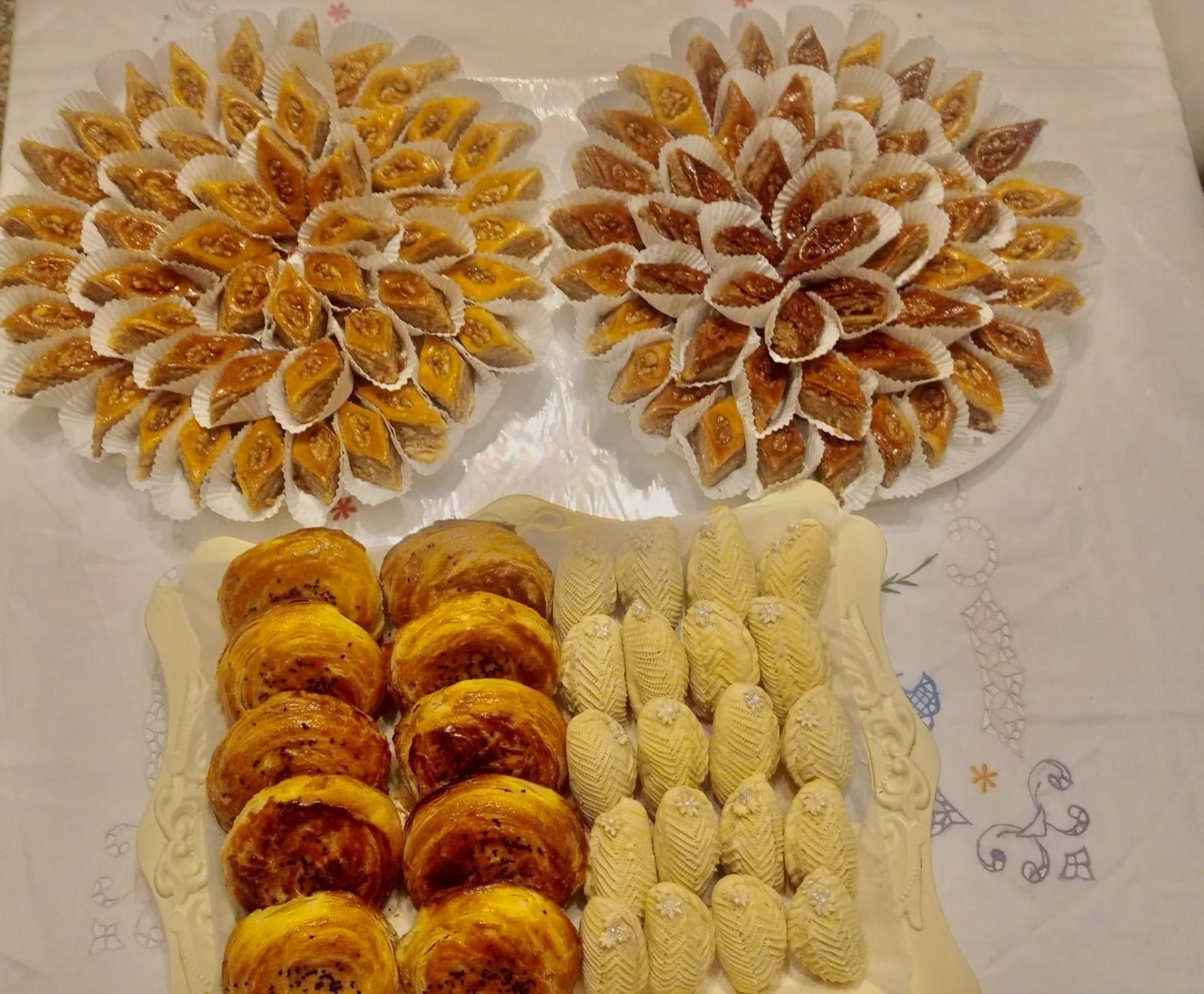
Pakhlava
Diamonds of layered dough with nuts and syrup — the most elegant sweet of Novruz.
Shekerbura
Crescent-shaped pastries with a nut-and-sugar filling and a fine pattern on the edge — a symbol of the young moon.
Gogal and badambura
Flaky gogal with turmeric and caraway and the tender almond badambura complete the sweet table.
Dyed eggs
Eggs are dyed in bright colours; people tap them together, and a whole egg brings luck — a symbol of new birth.
 Khoncha
A tray of meanings
What is placed on the khoncha
At the centre of the khoncha is the səməni, tied with a red ribbon. Around it are placed candles — one for each member of the family — dyed eggs, a mirror, nuts and dried fruit.
The khoncha is carried as a gift to loved ones and neighbours, filled with sweets. It is a sign of respect, warmth and a wish for a happy year.
 Sweets
The taste of the festival
Pakhlava, shekerbura, gogal
Novruz sweets are baked by the whole family a few days before the festival. Pakhlava, shekerbura, gogal and badambura — no table is complete without them.
Each sweet has its meaning: the pakhlava diamond recalls a star, the shekerbura the moon, and the gogal the sun. A whole sky gathers on the table.